
Coleman Technologies Blog

Coleman Technologies Blog

We can give your organization comprehensive IT services and 24/7/365 live support for a predictable monthly fee. Stop stressing about technology, and start focusing on growing your business.

Ransomware is Only Getting Worse in 2024


Ransomware is Only Getting Worse in 2024

Since it was first documented in 1989, ransomware has only become far more severe, ruthless, and, most of all, prevalent. Let’s review some important statistics to remember if you are to understand ransomware and, even more importantly, avoid its impact on your business.

Triple Extortion Ups the Ante

It wasn’t all that long ago that double extortion ransomware—attacks that first demand a ransom for data restoration and then a bribe, of sorts, to keep the attacker from leaking this data—was first spotted (which, for the record, was only just in 2019).

Now, however, triple extortion ransomware is on the rise. In addition to demanding a ransom for the decryption key and one to prevent data from being leaked, triple extortion adds the threat of regulators being notified by the criminals directly so the affected business will pay to prevent word from spreading. It is important to acknowledge that Coleman Technologies does not, has not, and never will endorse paying a ransomware demand. That said, it is easy to understand why doing so (especially when triple extortion is in play) is so tempting.

Despite this, you need to resist, ideally avoiding ransomware every time you can by educating your team about how it spreads and how to identify it.

Phishing and Ransomware Go Hand-in-Hand

Speaking of how ransomware spreads, one of the primary means that attackers use is phishing. By convincing a user to allow a threat past their defenses so that it can take root, ransomware can somewhat easily bypass the cybersecurity tools that businesses should have in place.

That means you and your whole team must be ready to spot phishing when it threatens your business. However…

Artificial Intelligence is Making Phishing Harder to Spot

Since it’s exploded into the relative mainstream, seemingly everyone has used AI to optimize their processes. Unfortunately, this includes those using phishing to their own nefarious ends.

Attackers are more capable than ever of crafting convincing scams using AI to their advantage. This makes it even more important that you and your team are ready to catch these threats as they appear.

Ransomware is Serious Business (Literally)

Nowadays, there are actual organizations built on and dedicated to cybercriminal activities. Some cybercriminals make their money using ransomware to extort it. In contrast, others craft ransomware and lease it out for others to use, providing a service in itself.

This makes ransomware more accessible than ever, so it’s more likely that your business will ultimately be targeted. Once again, you and your team all need to know the best practices for avoiding ransomware:

  • Not clicking unknown links
  • Not opening unexpected attachments
  • Maintaining a proper backup isolated from the rest of your systems

Your Business Can’t Afford to Underestimate Ransomware

Speaking of backups, we must acknowledge one small victory: the number of ransomware victims who paid instead of restoring from a backup has nosedived over the years. Some stats show that payments shifted from 85% of victims paying in 2019 to just 27-29% paying in Q4 of 2023. This is great, as it suggests that people are more aware of ransomware and using backups appropriately.

We can help your business do the same. Contact us to find out how our services can put you in a better position to succeed, no matter the consequences. Call (604) 513-9428 today.

Continue reading

An Ongoing Legal Battle Could Determine the Future of AI Used in Art


An Ongoing Legal Battle Could Determine the Future of AI Used in Art

You might remember the buzz when Josh Allen, a digital artist, won first place at the 2022 Colorado State Fair for his digital artwork called "Théâtre D'opéra Spatial." The catch? He created the image using AI. Now, he’s in a fight with the Copyright Office to prove that his work deserves copyright protection.

Copyright Office Denies Copyright 

In 2023, Allen tried to get a copyright for his winning piece, but the Copyright Office said no—twice. They argued that Allen didn’t have enough control over the final image because he used an AI tool to create it. The Office explained that since Allen didn’t directly control how the AI responded to his instructions (or “prompts”), the image wasn’t fully his creation.

Allen Fights Back

Allen is challenging the decision, saying the Copyright Office was influenced by all the media attention his work got. He argues that the Office shouldn’t judge whether art is made by AI or by humans because it’s not always easy to tell. Allen thinks this sets a bad example for how AI-generated art is treated, especially as technology gets better.

He’s now going to court to explain that, while the AI helped create the image, he spent over 100 hours carefully crafting over 600 prompts to guide the AI in making the exact image he had in his head—women in Victorian dresses with space helmets, performing opera on stage. Allen believes that his time, effort, and direction make him the true creator of the artwork.

The Copyright Office’s Take

The Copyright Office agrees that Allen’s prompts are original and can be protected. However, they say the final image generated by the AI cannot be copyrighted because Allen didn’t create it entirely by hand. They also mentioned that if Allen had made more edits to the image, like adding a filter, he could’ve registered his copyright without any issues.

What’s Next?

It’s unclear how this case will end, but it highlights how tricky it can be to figure out who owns AI-generated content. Allen’s battle with the Copyright Office has been going on for a while, and it may take even longer to get a final decision.

So, what do you think? Should artists be able to copyright works made with AI, or does the fact that a machine did most of the work change things?

Continue reading

The Dark Side of AI


GoodBadAI

Artificial intelligence, or AI, has upended the way that we discuss technology in business, society, and individual everyday life. While we mostly focus on the benefits of the technology, there are many downsides to consider as well. That’s what we’d like to discuss today; how AI has a dark side to it that potentially requires regulation.

Understanding AI

AI is, in short, a system of complex algorithms, data, and computers that can mimic human intelligence.

Through math and logic, AI can simulate human intelligence, and for the most part, it can do so quite effectively. However, there are problems with this technology that must be considered—and it’s not all strictly cybersecurity-related, either.

In short, there will always be those who want to use technology for evil rather than good.

Hackers can use AI to automate their threats. Companies can use AI to eliminate costs and lay off employees. Individuals or government agencies can use AI to misrepresent the ideas of others to manipulate the masses into believing their wacky ideas.

Indeed, if something technology-related is good, you can count on someone bad ruining it for everyone else.

Part of the problem is the “AI black box,” which refers to the idea that people simply don’t know how AI does what it does. The old adage from math class, “Show your work,” is important here, and there’s a serious lack of transparency surrounding how AI comes up with the responses it gets. And since AI is often trusted to handle some serious tasks, it’d be foolish to trust something you don’t know or understand with total control, yet some do it anyway.

This brings us to our final point: AI is not some omnipotent force, some all-knowing system that can fabricate content from nothing.

AI runs on data, and as such, you get out what you put in. The more data it’s supplied with, the more reliable and quickly it can push out an acceptable response. But the kicker here is that if the data is biased, AI’s response will be biased, too.

So, if the data and the AI are biased, the product will be biased, which will make the end result dangerous and counterproductive.

The Question of Regulation

While regulation could make AI much more fair and safe to use, the answer is not as simple as you might think.

If you don’t put rules in place, AI could make unfair and biased decisions—decisions that invade people’s privacy and have a negative impact on society. A lot of it also boils down to purpose. For those who want to use AI to breach the privacy and security of others, regulations can go a long way toward making that goal harder.

However, some believe such rules will only slow down the growth of AI and the technology that powers it.

Thus, the challenge becomes how to strike a balance between safety and allowing this technology to grow. If the rules are too rigid, small companies will find it harder to compete and survive in an increasingly competitive business environment. Those who believe mandates are too strict still believe guidelines would be helpful to keep AI creators responsible and accountable, but how effective this practice would be is a bit nebulous at present.

All in all, the primary goal of those arguing for the regulation of AI is for the protection and safety of others and their ideas, which can never be considered an inherently bad thing.

We’re sure you have plenty of questions about AI and how you can use it for your business. To learn more, call Coleman Technologies at (604) 513-9428.

Continue reading

Should Your HR Department Be Worried (About Automation)?


Automation Isn’t the First Threat

Human resources cover a lot of ground in any business. In fact, many smaller businesses extend the human resources role past the seven core functions of HR. These are:

  1. Recruitment
  2. Payroll Administration
  3. Benefits Administration
  4. Training and Professional Development
  5. Performance Reviews
  6. Labor Relations
  7. Managing Compliance

Over the past several years, the company human resources department, especially at small and medium-sized businesses, has been encroached upon by outsourcing. Like many other outsourced platforms Human-Resources-as-a-Service (HRaaS) services use technology to fill in the gaps left by not having dedicated HR professionals on staff. For the business, it reduces the cost, while fulfilling virtually the same roles through remote help desk and software

The Relationship Between Automation and HR

Technology changes things. Does it make it better? That’s a matter of opinion, but for the business owner, not having the human resources department means that they are on the hook to complete the tasks that the human resources department undertakes; and, there is a mountain of it.

That is, unless they can automate them.

The benefits of automation are the same no matter where it is put to use. It opens the way for staff to focus on being more productive, by leaving behind a lot of menial (yet time-consuming) tasks. Aside from enhancing efficiency and productivity, there are many key benefits to automating HR. They include:

  • Reduced employee turnover through improved employee engagement
  • Reduced storage and printing costs
  • Improved risk management and properly managed compliance
  • Improved document management
  • Enhanced business decision making with comprehensive reports
  • Optimized business growth through efficient onboarding

Today, there are plenty of software-based solutions that can keep any business running effectively, but when you get a look at them, these solutions aren’t really human resources platforms, they are human capital managers. 

What is Human Capital Management?

Human capital management is a platform that encourages businesses to treat their workforce as they would any other asset. Its goal is to get the human resources of the business to work as effectively and efficiently as possible. While human resources do more to deal with the individual needs and motivations of workers, human capital management seeks to look for metrics that can be quantifiable and strategically improved upon. It basically aims to change an organization’s view of their workforce from a commodity to an investment. 

What Strategy Is Best for Your Business?

There are multiple ways that automation can be implemented in the HR/HCM process, but depending on what strategy is used, you could be setting your company up for problems from your actual human resources. Most workers don’t like being treated like numbers on a spreadsheet after all. On the other hand, divorcing business decision-making away from typical workforce considerations that aim to sap overall productivity will benefit your organization’s bottom line. 

HR is always a balancing act. 

If you would like to know how automation could help you keep your organization balanced and productive, reach out to the IT professionals at Coleman Technologies today at (604) 513-9428.

Continue reading

AI Was the Hot Tech of 2023, But in 2024 It’s the Next Big Security Threat


AI Was the Hot Tech of 2023, But in 2024 It’s the Next Big Security Threat

2023 was definitely the year that AI became a household name. We’ve barely seen what artificial intelligence is capable of, and while industries are still coming up with more ways to use the technology, we’ve already seen countless examples of how people want to take advantage of AI for less savory purposes. 2024 is already shaping up to be the year that businesses need to protect themselves from AI-generated cybersecurity threats. Let’s take a look at everything you need to know as a business owner.

What’s the State of AI in 2024, and How Can It Be Used?

In case you haven’t been caught up, the tech world has been shifted by some new technology that uses vast amounts of information and complex algorithms to generate human-like text. In the simplest terms possible, engineers wrote a piece of software that was designed to “train” itself by reading a massive amount of text from the Internet. It read about 300 billion words from books, social media sites, news articles, and plenty of other types of content. Because it was able to absorb and index so much information, users can ask it questions and it can understand and respond to those questions in plain English (or Spanish, French, German, Italian, Portuguese, and more). 

This is called a Large Language Model, or LLM, and the most popular version of this right now is called ChatGPT. Most people commonly refer to this technology and other similar types of systems as artificial intelligence (AI).

These systems can do some pretty remarkable things. They can answer questions quickly, and generate large amounts of content on a topic very fast. You can “brainstorm” ideas with it, and then ask it to give you a task list for everything discussed. AI has been a great resource for software developers, as it can be used to quickly find security vulnerabilities in vast amounts of code before cybercriminals can exploit them.

And that’s where the problem lies.

Any Great Technology Can Be Used By Bad People

Paleontologists have determined that the earliest use of the bow and arrow happened about 60,000-70,000 years ago in South Africa. It’s suspected that this groundbreaking (at the time) device was used for hunting. Obviously we will never be able to pinpoint exactly when or how this happened, but at some point, the world experienced the first prehistoric person drawing a bow and arrow on a fellow prehistoric person. 

This has been the cycle for technology ever since, and when something new emerges, someone is going to figure out how to use it to cause trouble. Over the last several years, we’ve even seen the so-called troublemakers adopt modern technology even faster than the general population in some cases.

This is happening with AI. Cybercriminals are able to use AI to become much more effective. They can use AI to find vulnerabilities in software before developers are able to provide security patches. They can use AI to write phishing emails that are even more convincing and effective. They can use AI to write malware that is more devastating and infectious. 

Cybersecurity has always been a virtual arms race, and AI kicks things into overdrive. To stick with our theme, cybercriminals from 20 years ago were using the bow and arrow, and now with AI and other modern tactics, they have supersonic fighter jets. Businesses and individuals need to be even more vigilant about protecting their data.

Something That Most People Don’t Think About When It Comes to Cybersecurity

We all always talk about cybercriminals and hackers as if they are lone wolf anarchists sitting in a dark basement, drinking store-brand Mountain Dew, wearing a dirty hoodie, and staring into a bunch of screens with green matrix code.

The reality is that most cybercriminals treat their work like a business.

They are always working on getting the most profit for the least amount of effort; they follow and repeat successful campaigns and revamp things that don’t work.

But that’s not the worst part.

Over the last few years, it’s been uncovered that a lot of scammers and cybercriminals are actually trafficked people, forced to follow scam playbooks in order to pay off their captors and regain freedom. In some cases, when you get a scam phone call or text message or phishing email, it’s coming from a victim of human trafficking. 

There are entire compounds that house thousands of people, tricked away from their homes and families and essentially imprisoned to try to scam individuals and businesses. CNN recently did an incredibly eye-opening article that is worth checking out, but be warned, there is some disturbing content.

This gets us a little off topic when it comes to how AI is being used by cybercriminals, but we feel that it’s extremely important to raise awareness about these types of operations, and just how intense they are both in scale and misery. Cybersecurity is an industry all on its own, and every time an individual or organization gets scammed, it fuels something that is causing a lot more harm than simply forcing a business to its knees or stealing thousands of dollars. 

2024 Needs to be the Year We All Take Cybersecurity Extremely Seriously

Between AI, social engineering scams, and a growing industry of reprehensible cybercriminals, doing your part in protecting your business and yourself from cyberthreats will go a long way in ensuring that you can be successful. 

Coleman Technologies can help your business establish a culture of cybersecurity, and implement the tools you need to prevent threats. Get started with a cybersecurity audit—give us a call at (604) 513-9428 to get things kicked off.

Continue reading

Use Strategic Technology Upgrades to Build More Efficiently


Use Strategic Technology Upgrades to Build More Efficiently

Businesses struggle with a lot of different issues, but when a problem hits you hard in the pocketbook, it can be disastrous for the whole organization. Let’s take a look at some technology that can help you make the most out of your time and effort.

Streamlined Operations

Efficiency is the cornerstone of a successful business. Implementing technology can help streamline various operational processes, reducing manual errors, saving time, and lowering operational costs. Here are a couple examples:

  • Automation - Businesses can automate repetitive tasks such as data entry, invoicing, and inventory management. This not only reduces the risk of errors but also allows employees to focus on more value-added tasks.
  • Data Analytics - Advanced analytics tools can provide valuable insights into customer behavior, market trends, and operational inefficiencies. This data-driven approach enables businesses to make informed decisions and optimize their strategies.

Improved Customer Engagement

Technology enables businesses to connect with customers more effectively, resulting in increased revenue opportunities. Here's how:

  • Personalization - With the help of AI and machine learning algorithms, businesses can analyze customer data to deliver personalized experiences. This can boost customer satisfaction and lead to higher conversion rates.
  • Chatbots and AI-driven Customer Support - Implementing chatbots and AI-driven customer support systems can improve response times and provide 24/7 assistance, ultimately enhancing customer satisfaction.

Enhanced Decision-Making

Informed decisions are pivotal to revenue generation. Technology empowers businesses with access to real-time data and analytics that can guide strategic choices.

  • Predictive Analytics - Predictive models can forecast future trends and customer behavior, allowing businesses to proactively adapt to changing market conditions.
  • Risk Management - Technology aids in identifying and mitigating risks, ensuring that businesses can protect their revenue and assets effectively.

Are you Ready to Get More Done Through the Use of Modern Technology?

Coleman Technologies is here to help. Give us a call today at (604) 513-9428.

Continue reading

3 Pros and Cons of Artificial Intelligence for Small Businesses


3 Pros and Cons of Artificial Intelligence for Small Businesses

More small and medium-sized businesses than ever are seeing AI's potential to transform their operations. However, like any technology, AI has its own set of pros and cons. Let's discuss three major advantages and drawbacks you can expect if using it in your business. Hopefully, it helps you make an informed decision about adopting AI.

Is AI Actually Relevant to Small Businesses?

Artificial intelligence helps machines copy human intelligence, like learning, reasoning, and self-correction. It can be a game-changer by automating routine tasks, providing valuable insights, and enhancing customer experiences.

How SMBs Can Use AI

AI can be used in various functions within almost any small business. It can handle repetitive tasks, freeing your employees' time to focus on more productive work. It can also analyze large amounts of data and spit out actionable insights, helping you make better decisions based on metrics.

Here are just a few ways SMBs can embrace AI through the numerous AI tools specifically designed for small businesses:

  • Boosting customer service through chatbots
  • Improving marketing efforts with data analysis
  • Streamlining operations with automation tools
  • Enhancing decision-making with informed predictive analytics
  • Adjusting workflows with project management

These tools are designed to be user-friendly and cost-effective, making AI accessible to businesses of all sizes.

The Pros of Small Business AI

There are many AI benefits for SMBs. For instance, some benefits of artificial intelligence for small businesses include:

Increased Efficiency and Productivity

AI can automate routine tasks, freeing up time for employees to focus on more strategic work. This can lead to significant workplace productivity gains, allowing small businesses to do more with less.

Enhanced Customer Service and Personalization

AI can also enhance customer service. Chatbots can respond instantly to customer questions, improving their satisfaction and taking the pressure off your employees. Personalizing customer experiences is easier when you analyze data. This lets you give customized recommendations and offers, boosting engagement and loyalty.

Competitive Advantages and Simplified Growth

AI can provide a competitive advantage to small businesses. By leveraging AI, small businesses can gain insights and efficiencies that were once only available to larger corporations. Plus, AI solutions are scalable, growing with a business and providing long-term value.

The Cons of Small Business AI

While AI offers many benefits, it also presents challenges, including some key drawbacks that need to be considered:

Potential Job Displacement and Skill Gaps

AI can automate many tasks, potentially leading to job displacement as certain abilities become less relevant. Employees may need to learn new skills to work with AI.

Integration Challenges and Initial Costs

Incorporating AI into your systems isn't always easy, so smaller businesses may have difficulties. The initial costs can also be high.

Ethical Considerations and Data Security

AI also raises ethical considerations. For instance, using it in decision-making can lead to bias if not properly managed. Plus, using AI involves a lot of data, raising data security concerns. Small businesses must have robust data security if they want to use AI.

Balancing the Pros and Cons: Making an Informed Decision

You always need to evaluate the pros and cons of AI carefully. If you're going to be successful, you must be able to balance your business needs with your available resources.

Tips for Implementing Business AI with Minimal Risk

To minimize risk, start with small, manageable AI projects. Choose AI tools that work well with your existing systems, and ensure your team has adequate training and support.

Measuring the Success of AI Implementations

When you want to measure the success of your AI implementations, you have options. You could look for increased efficiency, improved customer service, enhanced decision-making, or even employee satisfaction and customer feedback.

AI offers potential for small businesses but has its challenges. Understanding these can help small businesses use AI to drive growth and success. We'll help you optimize your operations using business automation and other modern technologies.

Give us a call at (604) 513-9428 to learn more.

Continue reading

Everything You Need to Know About Chatbots


Everything You Need to Know About Chatbots

One of the biggest things that businesses need to consider today, from an IT front, is how artificial intelligence fits in. One way many companies are integrating AI into their businesses is through chatbot technology. Today, we will tell you everything you need to know to get started with chatbot technology.

Running a small business comes with many challenges: managing customers, handling inquiries, scheduling appointments, and marketing your services, just to name a few. While these tasks are mandatory for the creation of a successful business, they can also be extraordinarily time-consuming. That’s where chatbots come in.

Chatbots are AI-driven assistants that can automate various aspects of customer interaction, freeing up your time and improving your business operations. Here are some of the most practical ways small businesses can use chatbots.

Customer Support

Customers expect quick responses, but it’s not always possible to answer inquiries immediately, especially outside business hours. A chatbot can provide instant responses to frequently asked questions, assist with basic troubleshooting, and guide customers to relevant resources. This ensures that customers feel supported even when your team isn’t available.

Sales Assistance

A chatbot can act as a virtual salesperson, helping customers navigate your products or services, offering recommendations based on their needs, and even upselling related items. It can also assist with the checkout process, making the purchasing experience smoother and more efficient.

Appointment Scheduling

If your business relies on scheduled appointments, a chatbot can automate the booking process. Customers can check availability, schedule, reschedule, or cancel appointments without needing to speak with someone directly.

Lead Generation and Marketing

Chatbots can engage visitors on your website or social media pages, collect contact information, and sign them up for newsletters or promotions. By guiding potential customers through the sales funnel, they can help increase conversions with minimal effort on your part.

Internal Support for Employees

Chatbots aren’t just for customer interactions, they can also assist your employees. They can provide quick access to HR policies, answer common workplace questions, track schedules, and remind staff of important deadlines.

Technical Support

For businesses that sell tech products or software, chatbots can offer basic troubleshooting tips before escalating issues to human support teams. This reduces the volume of support tickets and helps customers resolve common issues quickly.

Why Your Business Should Consider a Chatbot

Chatbots improve efficiency, enhance customer experience, and reduce the workload on you and your team. Whether it’s handling inquiries, processing sales, or managing appointments, a chatbot can take care of routine tasks while you focus on growing your business.

Keep in mind that in most cases, an AI chatbot isn’t going to be as simple as installing it and letting it loose. You will need to take time configuring it, training it, and testing it to make sure it doesn’t go off the rails when customers make requests it doesn’t expect. 

Implementing a chatbot doesn’t mean replacing human interaction—it means streamlining processes so your business can operate more smoothly. If you’re looking for ways to improve customer engagement and save time, a chatbot could be a valuable addition to your small business.

For help with utilizing other modern technology throughout your business processes, lean on Coleman Technologies! Give us a call at (604) 513-9428 to learn more about what we can do for you.

Continue reading

Google’s AI Sees (and Understands) a Lot More Than You’d Expect


PersonalSetting

Would you be concerned if someone, with only an image, could infer things about you with better-than-expected accuracy? I don’t mean snippets, either—we’re talking about entire paragraphs of context.

Probably, right?

How concerned would you be if I told you that’s precisely what Google Photos does?

Let’s examine the research experiment that a startup photo storage and sharing service—founded by a former Google software engineer, no less—is presenting as an interesting bit of marketing.

Vishnu Mohandas’ Role at Google Gave Him Concerning Insights

A self-taught programmer, Mohandas was alienated by the tech enterprise when he learned that Google used AI to help the United States military examine drone footage. As he left the company, he also left its services behind.

Mohandas had realized that Google could very easily draw on the data stored in its cloud services to help train its AI further. This would include Google Photos.

When he left, Mohandas created a service he dubbed Ente, which would function as a privacy-first photo storage and sharing subscription. While Ente does generate profits, it has been challenging to convince people to shift from a convenient, free option to a paid service.

However, one of the company’s interns (as so often seems to be the case in stories like these) had an idea: why not show people exactly what Google’s AI could glean from your photos?

Hence, theyseeyourphotos.com was born.

Theyseeyourphotos.com Demonstrates What Google Can Do

By replicating the process that Google undergoes as it examines an image, Ente created Theyseeyourphotos.com to allow users to securely upload their own images to see what Google’s AI instantly interprets.

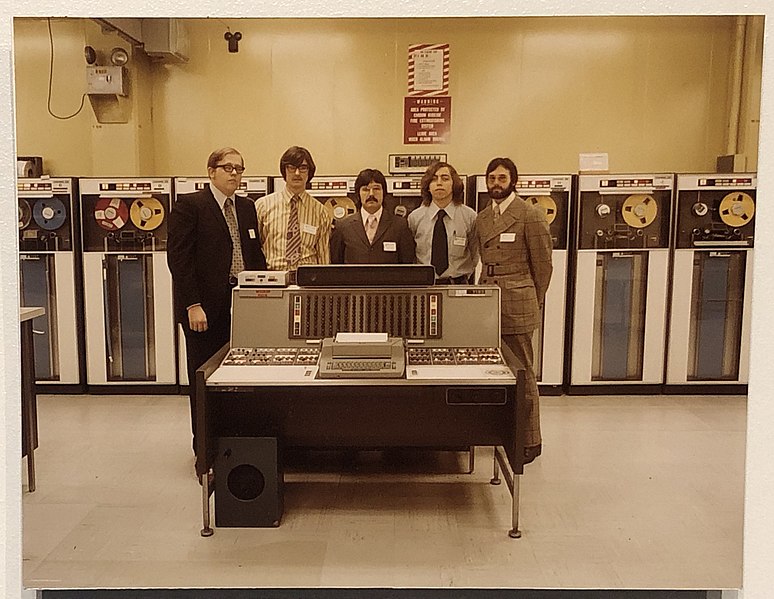
So, let’s say we were to upload the following image…

…They See Your Photos produces this result:

“The photograph shows a group of men standing in what appears to be a 1970s-era computer room. In the foreground is a large piece of computer hardware, possibly a mainframe console, with various knobs, buttons, and displays. The background features several large cabinets, likely containing tape drives, characteristic of computer systems from that era. The walls are a muted yellowish color, and there's a sign visible on the wall, indicating safety procedures or warnings. The floor is a light-colored tile, typical of institutional settings.

The men appear to be of Caucasian descent, likely colleagues in a professional setting given their attire. They are all dressed in business-casual clothing, with ties and suits. Their expressions are serious and somewhat formal, suggesting a professional portrait. They appear to be in their 20s and 30s. Based on the clothing and technology, their economic status is likely middle-to-upper-middle class. They seem to be involved in the operation or maintenance of the large computer system. The photograph was likely taken with a professional-grade camera considering its sharpness and composition. The picture appears to be from the mid to late 1970s.

The photo is subtly composed to emphasize the technology, positioning the men slightly in front of the equipment. There is a small speaker on the floor near the main computer console. The men are not all equally spaced; some subtle variations in stance and positioning can be seen on closer inspection. The overall image quality suggests an older photograph, perhaps printed from a film negative.”

All that, from one image. Imagine how much information could be gleaned from an entire collection.

We encourage you to give Theyseeyourphotos a try. However, despite their promises and philosophies, do not use anything you wouldn’t be comfortable having on the Internet.

What Does This Mean?

First of all, this is not an advertisement for this particular storage service. We simply wanted to share a very practical reason we all need to be careful about what we put online, as this shows how easy it can be to gain insights into someone from the simplest things. It is also important to keep in mind that, while this data currently isn’t being used for advertising purposes, it is being collected, processed, and stored by the company… meaning it could be used later to help create psychological profiles and similar collections of personal information.

Hopefully, this mindset is excessively cautious, but it never hurts to consider where your data is stored and how it may be used.

Continue reading

Is Unregulated AI Development Starting a “Race to the Bottom”?


race-to-bottom

Artificial intelligence is the latest IT buzzword that everyone seems to focus on and it’s because it is a big deal. Advances in computing have created an environment where developers can create software that effectively learns. Unfortunately, due to the nature of AI regulation; or, the complete lack of it, there are some who are concerned that the technology—which could be a revolutionary tool for the improvement of human societies—is being degraded.

“A Race to the Bottom”

One of the predominant AI researchers on the planet, MIT physics professor Max Tegmark made some serious statements about the current use of AI to The Guardian. Tegmark’s comments were:

“We’re witnessing a race to the bottom that must be stopped. We urgently need AI safety standards, so that this transforms into a race to the top. AI promises many incredible benefits, but the reckless and unchecked development of increasingly powerful systems, with no oversight, puts our economy, our society, and our lives at risk. Regulation is critical to safe innovation, so that a handful of AI corporations don’t jeopardize our shared future.”

His belief is that the more powerful the technology becomes without proper oversight, the more apt that it can go sideways and have dire consequences for society. As innovation of AI technology speeds up, it stands to reason that there are some truths behind his viewpoint. AI, at current levels, is set up to mimic human responses to queries, but can do it at a much faster rate due to these systems’ ability to pour through underlying data. Advanced AI, or what they are calling Artificial General Intelligence, describes systems that can surpass human intelligence and efficiency in ways that are reckless until other, more scaled-back systems are deemed to be good for humanity as a whole. 

It’s Science Fiction

So many Sci-Fi stories that deal with rogue AI have been created that it’d take an AI just to help list them all. These stories have almost always been created as cautionary tales, fashioned long before we had AI platforms. Most of these stories end with the destruction of humanity by their own creation. It’s hard to believe, as a layman, that the technology has already grown to the point where there are concerns over whether or not humans will lose control over it, but with respected academics obviously anxious over how fast AI is being developed, it may be prudent to take a step back and throttle back on the gas, as it were. 

Unfortunately—depending on your perspective—these AI initiatives have the full support of some of the largest and most important technology companies in the world. Microsoft, Google, Apple, Meta, and Amazon have all earmarked multi-billion dollar investments over the next five years; and if history gives us a glimpse on how this will go, they will be looking to bring to market products that will get them significant returns on their investments. Could this spell curtains for humanity? I sure hope not, but if you consider Tegmark’s comments, it could mean that it is in fact “a race to the bottom.” 

Potential AI Regulation

It’s not that uncommon to see times when industrialists and academics are at odds. People have a view that the more regulations you put on any system, the more you are confining it to mediocrity. AI is no different. In October 2022, the White House published a paper titled A Blueprint for an AI Bill of Rights. This is basically a document that was created starting a serious conversation about regulating AI and some rules that would keep it from being a blight on humanity. It was put together by government officials with The Office of Science and Technology Policy working with academics, human rights organizations, and even input from Microsoft and Google. Other nations have their own ideas for regulation. Japan, Singapore, and the European Union all have some AI-based regulation on the books, but outside of Colorado, there have been no sweeping mandates that would be controversial anywhere in the United States regarding AI regulation.

Ultimately, AI is a great tool that could really take humanity into the next phase of existence on this planet (and to others), but if people are reckless with it for the profit of private or public organizations, it could really end up being the end of humanity. Only time will tell. If you are interested in AI and other technologies, share this article with others and return to our blog soon.

Continue reading

AI is Progressing, but It’s Not the Answer to All Your Problems


AI is Progressing, but It’s Not the Answer to All Your Problems

You can’t take two steps outside of your home or two mouse-clicks or screen-taps online without seeing something written or hearing someone talking about AI. This has created a situation where every business is claiming AI as a revolutionary tool and consumers, overwhelmed with the term, have begun to take the technology for granted. In today’s blog, we want to determine whether AI brings added value or is just a term used to help companies market their products.

What is AI?

Before we get into what to look for in AI, we should describe what AI means for the average consumer. Artificial Intelligence isn’t exactly the same technology that you remember from science fiction. Although the fundamentals are the same, AI today is effectively computer programs that use the data available to automate aspects of a business and create more efficiency. 

That sounds great, right? This is why nearly every software product you come across nowadays features “AI”. Not all AIs are created equal, however, and today there is quite a bit to sort through. Let’s take a look at three elements of the modern landscape of AI and how they play into you using it for your business. 

AI Will Be Pervasive

Let’s face it, AI is everywhere, and it will continue. In fact, the number of AI systems has grown by 500 percent over the past two years. AI fits into three categories. They are:

  • Generative AI - The most prevalent type of AI you’ll see baked into software and as stand-alone software, like ChatGPT. This technology can create text, images, videos, and more and is being used in all manners of applications for government, education, business, and more.
  • Machine Learning - This type of AI is being used to turn data into visible insights that can help organizations improve their ability to support the people that use their services and buy their products. 
  • Recognition - This AI is being used primarily for security. From simple applications that unlock your mobile device to complex facial recognition tools built into today’s surveillance systems, AI systems fuel real-time recognition that is helping in loss prevention.

This is just the tip of the iceberg. As it is used today, AI is in its infancy and will only get more advanced as time goes on. Do you think you could use AI in your business? If so, our technicians can help. Give us a call at (604) 513-9428 to learn more.

Continue reading

Big Business is Fueling AI Growth


Big Business is Fueling AI Growth

With little fanfare, the AI Wars have begun. When we say “war” we mean just that: a battle for the survival of tools designed to improve human productivity. To start we should rewind a little. Most new software platforms (and many, many established ones) have started to use “artificial intelligence” to improve their products, or at least improve the prospect of selling them. In this week’s blog we will discuss the increased prevalence of “AI” and how some of the largest names in computing have gone all in on the technology.

What You Need to Know About AI

The first thing you should understand is that there is a big difference between AI built for consumers and AI built for business purposes. The customer-driven AI is typically using the web as a dataset, while most business-related AI tools use defined data sets provided by the company in which to create responses. This is a huge difference and the specificity needed to properly function within the business relies on it. 

Beyond that, since consumers are eating up the “AI” revolution, they often don't know what they are actually buying. They end up advancing the agendas of some of the largest companies that do business on the Internet. In this week’s blog we will go through some of the major companies that are at the forefront of advancing AI.

Google

Let’s start with Google. Google has been a pioneer with its AI research arm, DeepMind, which has achieved significant milestones like AlphaGo and AlphaFold. These projects showcase AI's potential in solving complex problems. Google also integrates AI across its products, such as using machine learning to enhance search algorithms, improve language translation, and most importantly for them, improve their advertising strategies. The company's focus on ethical AI development, through initiatives like the AI Principles, aims to ensure responsible and beneficial AI deployment.

Amazon

Amazon is another major player, leveraging AI to transform its vast e-commerce and cloud computing operations. Through Amazon Web Services (AWS), the company offers AI and machine learning services to businesses of all sizes, enabling them to incorporate sophisticated AI capabilities into their operations without needing extensive in-house expertise. Amazon's AI applications are evident in its recommendation systems, which personalize shopping experiences, and in its logistics and supply chain management, where AI optimizes inventory levels and delivery routes. Additionally, Alexa, Amazon's voice assistant, exemplifies how AI can enhance consumer technology, offering users voice-activated control over various smart home devices.

Microsoft

Microsoft has also made significant strides in AI, particularly through its Azure cloud platform, which provides a comprehensive suite of AI tools and services. The company emphasizes democratizing AI, making advanced technologies accessible to developers and organizations worldwide. Microsoft's AI research focuses on areas such as natural language processing, computer vision, and reinforcement learning, which are integrated into products like Microsoft 365 and Dynamics 365 to improve productivity and business processes. Furthermore, Microsoft's acquisition of AI startups and partnerships, like its investment in OpenAI, underscores its commitment to leading AI innovation while addressing ethical considerations and ensuring AI benefits society.

Meta

Facebook, now Meta, utilizes AI to enhance user experiences across its social media platforms and advance its ambitious vision of the metaverse. AI algorithms are crucial in content moderation, detecting and removing harmful content to maintain a safer online environment. Additionally, AI powers personalized content recommendations, improving user engagement by curating feeds based on individual preferences. Meta's Reality Labs are pushing the boundaries of AI in augmented reality (AR) and virtual reality (VR), developing technologies that could revolutionize how people interact digitally. The company's focus on AI ethics and transparency aims to build trust and address the challenges of bias and misinformation.

IBM

IBM continues to be a significant contributor to AI advancements through its Watson platform, which provides AI solutions tailored to industries such as healthcare, finance, and customer service. Watson's natural language processing capabilities enable businesses to analyze vast amounts of unstructured data, derive insights, and automate decision-making processes. IBM's research in AI focuses on areas like explainable AI and trustworthy AI, striving to create systems that are transparent, fair, and accountable. IBM collaborates with academic institutions and other companies to advance AI research and applications, fostering a collaborative environment that accelerates innovation and addresses global challenges.

AI is a big piece of the technology puzzle for a lot of businesses, including some of the biggest tech companies on the planet. With these companies pushing the boundaries of how AI is used, more businesses will gain access to the technology to help them improve their organizations.  If you would like to understand how you can use AI inside of your business, call us for a consultation today at (604) 513-9428.

Continue reading

About Coleman Technologies

Coleman Technologies has been serving the British Columbia area since 1999, providing IT Support such as technical helpdesk support, computer support and consulting to small and medium-sized businesses. Our experience has allowed us to build and develop the infrastructure needed to keep our prices affordable and our clients up and running.

get a free quote

Understanding IT

Get the Knowledge You Need to Make IT Decisions

Technology is constantly evolving, and keeping up can feel overwhelming. Whether you want to understand cybersecurity threats, explore automation, or learn how regulations like PCI DSS impact your business, we’ve made it easy to access clear, straightforward insights on key IT topics.

Insights to Understanding IT

Contact Us

20178 96 Ave C400
Langley, British Columbia V1M 0B2

Mon to Fri 7:00am–5:00pm

[email protected]

(604) 513-9428

Coleman Technologies Awards & Memberships

Image
Image
Image